Healthy Travel Habits That Do Not Require a Perfect Diet or Workout Plan
You do not need to pack a perfect diet or a full workout plan to stay well on the road. A handful of flexible habits — hydration, movement, sleep, and eating around familiar basics — travel far better than rigid rules.
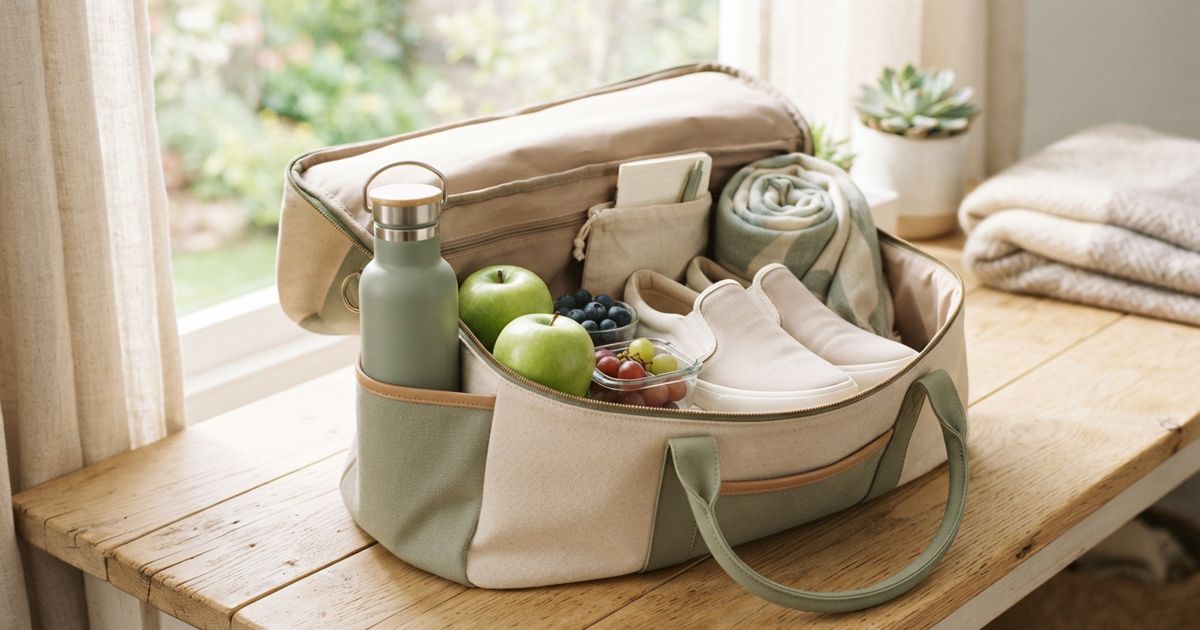
Table of contents
Travel has a way of dismantling healthy routines. Different food, disrupted sleep, long stretches of sitting, and no familiar structure — it is no wonder people either white-knuckle a rigid plan or give up entirely. There is a calmer middle path. You do not need to pack a perfect diet or a full workout program to stay reasonably well on the road. You need a handful of flexible habits that survive being away from home.
Drop the all-or-nothing mindset first
The most useful travel habit is a mental one: let go of the idea that a trip has to be either perfectly healthy or a complete write-off. That binary is what turns one indulgent meal into a lost week. Aim for "good enough and consistent" instead of "perfect and fragile." A few sensible defaults you keep most of the time will always beat an ideal plan you abandon on day one.
This mindset also makes trips more enjoyable, which is rather the point. You are not trying to optimize your vacation — you are trying to come home feeling roughly like yourself.
Anchor a few habits, let the rest flex
You cannot control everything while traveling, so control a small number of things and let the rest go. Pick two or three anchors and protect them; treat everything else as negotiable.
- Hydration. Travel — especially flying and hot climates — makes it easy to end up under-hydrated. Carrying a refillable bottle and drinking regularly is a low-effort anchor. If you are sweating heavily or unwell, our note on electrolytes covers when plain water may not be enough.
- Some daily movement. Not a workout — just not sitting all day. More on this below.
- A loose sleep anchor. You will not keep a perfect schedule, but one or two habits can soften the disruption.
Two or three anchors you actually keep are worth more than ten rules you drop by lunchtime.
Eating well without a rigid diet
You do not need to hunt down your usual meals or track anything. A few flexible principles travel better than a strict plan:
- Build meals around the same basics you would at home. Aim for some protein, some vegetables or fruit, and a source of fiber where you can. Our guide to building a balanced plate works just as well from a menu as from your own kitchen.
- Do not skip meals to "save room." Arriving somewhere overly hungry usually leads to worse choices, not better ones.
- Keep a simple snack on hand. Something with protein or fiber turns a long transit day from a vending-machine gamble into a non-event.
- Enjoy the local food. Trying regional dishes is part of travel. One rich meal is not a problem — it is the whole trip run on autopilot that adds up.
The goal is not restriction. It is having enough of a default that you are not making every decision from scratch while tired and hungry.
Movement that fits any trip
Structured exercise while traveling is a nice bonus, not a requirement. What reliably works is weaving movement into how you get around and explore:
- Walk to see things instead of defaulting to transport
- Take stairs when they are there
- Break up long sitting — flights, drives, conference days — with a short stroll
- Use a few minutes of stretching or bodyweight movement in your room if you like
Sightseeing on foot alone often adds up to plenty of movement without any of it feeling like exercise. If you already lean on a walking-based approach at home, travel is where it really earns its keep.
Protecting sleep when your schedule is chaos
Sleep is usually the first casualty of travel, and it quietly drives how you eat, move, and feel. You will not keep your normal routine, so aim for damage control rather than perfection:
- Keep one or two of your usual wind-down cues, even in an unfamiliar room
- Get some daylight during the day, which helps your body clock settle
- Be deliberate about caffeine timing when you are already sleep-short
- Make the room as dark and quiet as you reasonably can
Our guide to sleep hygiene that works has the small habits worth carrying with you. Even a couple of them can take the edge off jet lag and short nights.
Come home without a "restart" project
The final habit is about the return. If you have kept a few anchors, there is nothing to recover from — you simply slide back into your normal routine. No punishing catch-up plan, no guilt-driven overcorrection. If your usual habits are still a work in progress, easing back in alongside a simple starter plan is gentler and more durable than trying to erase the trip in a week.
The takeaway
Staying healthy while traveling is not about willpower or packing your whole routine into a suitcase. It is about carrying a few flexible habits — stay hydrated, keep moving, protect sleep where you can, and eat around familiar basics — while letting the rest flex. Drop the all-or-nothing mindset, protect two or three anchors, and enjoy the trip. That is how you come home feeling like yourself instead of needing to recover from your holiday.


