How to Make Healthy Eating Easier When You Share a Kitchen
Sharing a kitchen with family, a partner, or housemates does not have to derail your eating. Here are realistic, low-friction ways to make the healthier choice the easy one — without policing anyone else.
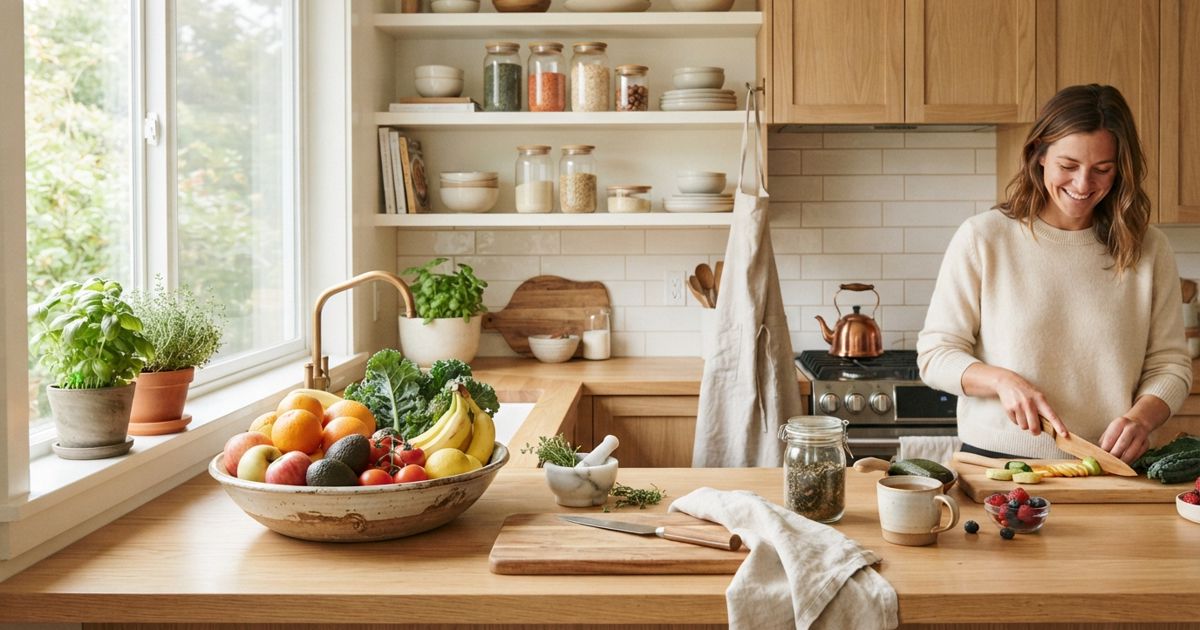
Table of contents
Eating well is a lot easier in a kitchen you control completely — which is exactly the kitchen most of us do not have. Whether you live with family, a partner, roommates, or in a shared house, you are constantly surrounded by other people's food, habits, and preferences. The good news is that you do not need everyone else to change for you to eat better. You just need to make your own healthier choices a little more convenient and everything else a little less automatic.
This is about strategy and kindness, not policing. Trying to control what other people eat rarely works and usually creates friction. Focus on your own environment instead.
Make the easy choice the healthy choice
Most eating decisions are driven by convenience and visibility, not willpower. In a shared kitchen you can quietly tilt those factors in your favor:
- Put good options at eye level and in front. Keep fruit in a bowl on the counter and cut vegetables at the front of the fridge. What you see first, you tend to eat.
- Make the less-helpful stuff less visible. You cannot dictate what housemates buy, but you can store your own tempting snacks out of immediate sight rather than open on the counter.
- Pre-prep a little. A container of washed fruit or chopped veg turns "healthy" into "grab and go," which is how it competes with easier options.
This is the same logic behind keeping a beginner grocery list for better energy: decisions made at the store and in storage shape what you actually eat later.
Claim a little space of your own
You do not need a separate kitchen — just a small, reliable pocket of it.
- A shelf or a bin. Having one fridge shelf or a labeled bin for your staples keeps your good options findable and reduces the "there's nothing for me" moment that leads to grabbing whatever is around.
- Keep versatile basics on hand. A few dependable items — eggs, yogurt, oats, canned beans, frozen vegetables, whole grains, fruit — let you build a balanced meal even when the shared shelves are full of things you would rather not build a meal from.
- Have a backup plan. A couple of quick, no-cook options for when the kitchen is busy or occupied keeps you from defaulting to takeout.
Find the overlap instead of cooking twice
Shared kitchens often mean shared meals, and you do not have to opt out. Look for common ground:
- Build meals everyone can customize. Tacos, grain bowls, pasta with a veg-heavy sauce, or a stir-fry let each person adjust their own plate. You add more vegetables and protein; someone else adds more of what they like. No one feels policed.
- Upgrade the shared dish quietly. Adding a side salad, swapping in a whole-grain option, or bulking a meal with extra vegetables improves it for everyone without announcing a "health" agenda.
- Cook once, eat twice. When it is your turn, make a balanced meal in a bigger batch so you have leftovers ready when the kitchen is chaos.
If you want a simple framework for turning any of these into a steadying meal, building a balanced plate is an easy reference to keep in mind.
Handle the social side gracefully
The trickiest part of a shared kitchen is often the people, not the food.
- Lead by example, not by lecture. Quietly eating well is more persuasive and far less annoying than commenting on what others eat.
- Do not demonize shared treats. If housemates bake or order in, you can join in a modest portion without it derailing anything. Flexibility keeps this sustainable and keeps the peace.
- Communicate about shared shopping. If you split groceries, suggest a few shared staples everyone benefits from — fruit, vegetables, a decent bread — rather than trying to veto anyone's choices.
- Respect that it is their kitchen too. Your goals are yours to manage. Imposing them on others tends to backfire.
Quick wins for a busy shared kitchen
- Keep a fruit bowl visible and stocked.
- Prep a grab-and-go container of cut vegetables or fruit at the start of the week.
- Stock a few no-cook balanced options for when the kitchen is occupied.
- Batch-cook when it is your turn so leftovers cover the busy days.
- Store your easy-to-overeat snacks out of direct sight.
- Add a vegetable or a protein to whatever shared meal is already happening.
When eating "perfectly" is not the point
It is worth remembering that shared living involves compromise, and that is fine. You will not eat exactly how you would in a solo kitchen, and you do not need to. Consistency across most meals matters far more than any single one. If mealtimes with others are a source of stress or conflict rather than connection, that is worth reflecting on — and if food-related stress runs deeper, a clinician or qualified professional can help you sort it out.
The bottom line
You cannot control a shared kitchen, but you can shape your slice of it: make good options visible and convenient, keep a small stash of versatile staples, find meals everyone can customize, and lead by quiet example instead of policing anyone. Aim for easier, not perfect — that is what makes healthy eating stick when the kitchen belongs to everyone.


